Showing posts with label atherosclerosis. Show all posts

Sunday, October 25, 2015

Atherosclerosis Treament

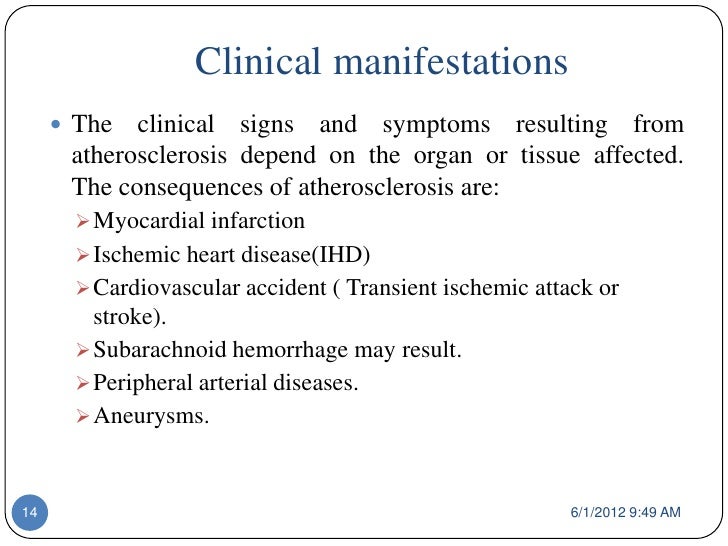
Progression and regression of existing plaque in the arteries can be treated via the modification of atherosclerotic risk factors.  Treatment for atherosclerosis occurs primarily through healthy life-style changes such as diet, physical activity and relinquishing smoking.  Other more clinically oriented options include medicine, medical procedures, and surgery.  Because atherosclerosis is so difficult to detect prematurely--aside from having already lived a healthy lifestyle--treatment for atherosclerotic treatments do not vary immensely from stage to stage within the disease.

Healthy eating is essential for preventing or treating further cases of atherosclerosis.  While there are many elements to healthy eating, atherosclerosis-specific diets should contain low levels of saturated fat, no trans fat, a higher consumption of fruits and vegetables and fibers, as well as a moderate intake of alcohol.  Further, if an individual has been diagnosed with hypertension, their doctor may recommend Dietary Approaches to Stop Hypertension (DASH).  This diet focuses on the consumption of fruits, vegetables and whole grains.  Conversely, it suggests avoiding foods high in fat, cholesterol and sodium.

Other important aspects to healthy living, especially in regards to treating atherosclerosis, is physical activity and refraining from smoking.  At least thirty minutes of aerobic exercise each day can lower risk factors of atherosclerosis such as LDL cholesterol, high blood pressure, and excess weight.
Further, beyond diet and exercise, it is important to refrain from smoking.  Smoking damages blood vessels and can increase risk for this disease.  Quitting smoking and avoiding second hand smoke can lower an individual's risk of forming blood clots and help reverse heart and blood vessel damage immediately.

If atherosclerosis has progressed significantly, more immediate or extreme means of treatment may be necessary.  Often times drugs are prescribed if someone has coronary heart disease, peripheral arterial disease, or high LDL levels.  Medication can also be prescribed to help lower blood pressure and blood sugar levels, or prevent blood clots and inflammation. Even still, there are quicker--yet more invasive--means of treating severe buildup of plaque in the arteries. For example, Percutaneous coronary intervention (PCI), or coronary angioplasty, is a procedure that opens a blocked coronary artery.  This procedure allows better blood-flow to the heart, preventing a heart attack.  Occasionally, a stent is placed in the artery for long-term effect.  Another type of surgical intervention includes coronary artery bypass grafting (CABG).  This surgery will form a bypass that will go around narrowed coronary arteries by using arteries from other areas of the body.  Again, this allows for better blood flow, and hence better oxygen supply to the heart.  Similar approaches are used in arteries leading to the brain as well as peripheral arteries.

Treatment for atherosclerosis can be difficult and may take time.  However, these methods can improve endothelial function, reduce inflammation, prevent blood clotting and decrease risk for further plaque build-up, overall decreasing chances for fatalities.


http://www.nhlbi.nih.gov/health/health-topics/topics/atherosclerosis/treatment
http://www.merckmanuals.com/professional/cardiovascular-disorders/arteriosclerosis/atherosclerosis

Friday, October 9, 2015

Signs and Symptoms of Atherosclerosis

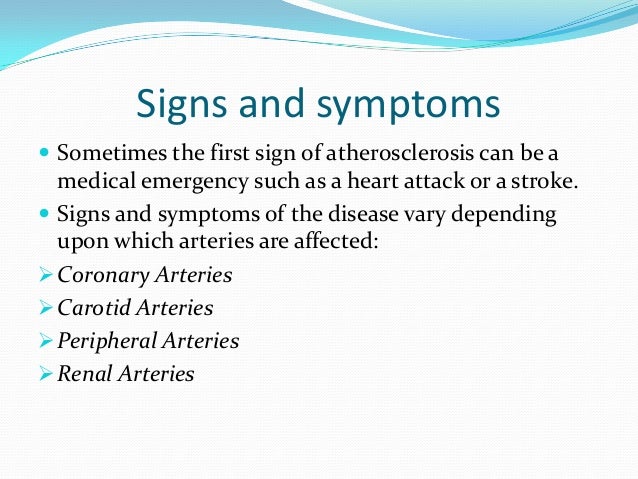
Atherosclerosis, latent in its nature, is a disease difficult to diagnose due to its general lack of overt signs and symptoms.  Because the progression of this disease occurs hidden within the lumen of the body's arteries, people do not regularly check for this disease until severe damage, such as a myocardial infarction or stroke occurs.  As a result, many people do not realize they have atherosclerosis until such medical emergencies take place.

However, while this disease has a relatively small number of signs to look for, there are a few key identifiers, that might indicate the presence of atherosclerosis. Yet, it is important to remember that each sign and symptom is different according to the affected artery. One symptom that many people experience in relation to coronary arteries is angina.  Angina is a pain or discomfort that takes place in the chest when the heart is not receiving an adequate amount of blood.  Someone experiencing this symptom may feel a tight pressure in the pleural cavity.  This pressure can also extend through one's shoulders, arms, neck, jaw or back, and can be triggered by emotional stress and physical activity, or relieved with rest.  Additional symptoms of coronary heart disease (CHD) include shortness of breath and arrhythmia.

Another primary location for atherosclerosis is the carotid arteries.  Blockage of these arteries prevents the flow of oxygen-rich blood to the brain and can cause a stroke. Symptoms and signs of carotid artery disease include sudden weakness, paralysis or numbness in one half of the body, confusion, trouble speaking and understanding, dizziness, loss of balance and coordination, as well as difficulty breathing.

Finally, plaque buildup can occur in the peripheral and renal arteries.  Peripheral arteries are the arteries leading to legs, arms and pelvis. Numbness and pain are the primary symptoms of peripheral arterial disease, and while blockage of these arteries is not as severe, understanding the symptoms is important nonetheless.  Blockage to the renal arteries can result in chronic kidney disease which can lead to decreased kidney function.  Initially, there is no way to determine whether or not someone has chronic kidney disease.  However, with time people see changes in their urination patterns, loss of appetite, nausea and swelling in the hands or feet.

http://www.mayoclinic.org/diseases-conditions/arteriosclerosis-atherosclerosis/basics/symptoms/con-20026972


Sunday, September 20, 2015

The Pathophysiology of Atherosclerosis

Pathophysiology
Atherosclerosis is a disease characterized by the buildup of fatty streaks within the arterial tree.  This disease sets its roots when an accumulation of atherosclerotic plaque, primarily consisting of lipids, inflammatory and smooth muscle cells, and the matrix of connective tissue, forms.  Ironically, this disease begins to form when the body sends an inflammatory response to injury or destruction of the endothelial layer of the artery.  While atherosclerosis can develop in any area within the arterial tree, certain areas are more prevalent.  For instance, in areas where the arterial tree branches, endothelial dysfunction is likely, which in turn, stops endothelial production of nitric oxide.  Nitric oxide is a vasodilator and anti-inflammatory molecule that plays a large role in maintaining the tone of the endothelium of arteries.

 Further, in areas of a diminished blood flow, the endothelial cells are less likely to produce adhesion molecules; these molecules are tasked with finding and binding inflammatory cells, so when they aren’t present, inflammation is more likely to occur.  Certain risk factors are also known for inhibiting nitric oxide production, as well as stimulating the production of certain molecules, cytokines, proteins and other elements that are detrimental to the arteries.  Essentially, this will result in the endothelial binding of monocytes and T cells.  As these cells flow into the subendothelial space, a local vascular inflammatory response is at stake.  Eventually, the monocytes in the endothelium are transformed into macrophages.  Passing lipids such as low-density lipoproteins (LDL), bind to the endothelial cells and are oxidized.  Oxidation of these lipids and macrophages produce foam cells, resulting in the initial stages of atherosclerosis.

As atherosclerosis develops, the plaque can be either stable or unstable.  On one hand, stable plaque can disappear, remain static, or continue to grow until occlusion or stenosis occurs.  On the other hand, unstable plaque increases chances for thrombosis which can lead to infarction. 

Unstable plaque is formed when the integrity of a layer of fibrous connective tissue called the fibrous cap, is tested.  Certain enzymes are activated by macrophages in the plaque and will eventually consume the fibrous cap, ultimately weakening its structure and causing a rupture. Ensuing the rupture, plaque roams freely in the blood stream, and thrombosis is likely.  

Risk Factors
There are many risk factors for atherosclerosis: many of these factors tend to demonstrate association with the metabolic syndrome.  Certain related factors with metabolic syndrome include abdominal obesity, atherogenic dyslipidemia, hypertension, insulin resistance, aprothrombotic state and a proinflammatory state.  However, there are many other factors that can and do play a role in atherosclerosis.  Below is a link that lists and describes many issues and diseases as they relate to atherosclerosis.


Wednesday, September 2, 2015

What is Atherosclerosis and How Does it Affect the Body?

Atherosclerosis, also known as Ateriosclerotic Vascular Disease (ASVD), is a disease that results when an excessive buildup of plaque forms and adheres to the lining of the body’s arteries.  As the plaque lingers, it begins to harden, causing these blood vessels to narrow and restrict blood flow from the heart to the body’s tissues and organs. This limited ability to receive oxygenated blood can cause serious cardiovascular complications such as strokes, myocardial infarctions and even death if not treated properly or in a timely manner.  
   
ASVD begins to form when the endothelium, a thin layer of cells lining the lumen of the artery, is damaged.  Damage to the endothelium can result from high blood pressure, smoking, or high cholesterol levels. The impaired layer allows LDL cholesterol to accumulate along the wall.  In response to this foreign buildup, the body sends white blood cells called macrophages to act as a defense system and rid the body of the cholesterol. However, what was initially meant as good can lead to bad.  Occasionally, some of the macrophages will remain in the damaged area, and as they conglomerate with the cholesterol, plaque begins to form.  The continual presence and flow of blood through the artery contributes other substances such as fat and calcium to the buildup.  While the limited flow of blood through the body is unsafe, the true danger occurs when a piece of plaque breaks away or when a thrombus forms.  If either of these blocks the artery, the flow of blood discontinues, significantly reducing the oxygen supply to the body.  Were this to occur in either of the two coronary arteries, the heart is deprived of oxygen and undergoes cardiac ischemia.  Prolonged, the tissues of the heart die and myocardial infarction occurs.  Further, the same idea is applied when the brain’s arteries are blocked, and the brain receives an insufficient supply of oxygen.  Without the essential oxygen, the brain tissue dies and a stroke ensues.   


While atherosclerosis might initially seem trivial, it has the potential to substantially affect your health. So the question is, will you let it?


For more information visit the link below:


“Atherosclerosis – 3D Animation || ABP ©.” YouTube. YouTube, n.d. Web. 04 Sept. 2015.
Rooke, Jennifer. Atherosclerosis. Digital image. Advanced Lifestyle Medicine. N.p., n.d. Web. 2 Sept. 2015.